Showing posts with label TECHNOLOGY. Show all posts

5/03/2012

The battle of wing extensions for new single-aisle


"Dual feather winglet."
This is the new solution proposed by Boeing for the new 737MAX. The winglet on the 737 MAX will have two tips, one bending up, the other down.

The Boeing Co. has designed a new winglet for the 737 MAX to cut fuel costs.The company previously had estimated the MAX would offer fuel savings of 10 percent to 12 percent compared to the current 737, with this solution the additional saving is 1.5 percent on fuel.
"Incorporating this advanced technology into the 737 MAX design will give our customers even more advantage in today's volatile fuel-price environment," Jim Albaugh, president of Boeing Commercial Airplanes, said in the statement. Boeing launched the upgraded 737 MAX last August to compete with the A320 new engine option, or A320neo, which rival Airbus announced in late 2010. Both re-engined single-aisle jets are expected to offer improved fuel savings.
High Resolution Image (click for larger) of what Boeing expects the winglet for the new 737 MAX will look like. Image from Boeing.  "The concept is more efficient than any other wing-tip device in the single-aisle market because the effective wing span increase is uniquely balanced between the upper and lower parts of the winglet," said Michael Teal, chief project engineer for the  737 MAX. Boeing said the dual feather winglet was validated during wind tunnel testing of the 737 MAX. The new winglet fits existing airport gate constraints "while providing more effective span, thereby reducing drag," the company said. "We have assessed the risk and understand how to leverage this new technology on the MAX within our current schedule," said Teal. "This puts us on track to deliver substantial additional fuel savings to our customers in 2017." The company estimates the 737 MAX will use 18 percent less fuel than the current Airbus A320.
In 2009, Airbus announced it would offer fuel-saving wing tips that the company calls "sharklets" as an option on the A320. The neo adds winglets — Airbus calls them "sharklets" — to the current A320 design, but they are very similar to the upward swooping winglets on today's 737s.
Because the 737 already has winglets, Airbus executives have argued that the MAX cannot gain the extra 3.5 percent fuel-burn improvement the European plane-maker will gain by adding winglets to the neo. Wednesday's announcement of a radical new Boeing winglet design undercuts that argument. Boeing had previously claimed a 5 percent fuel-burn advantage over the neo. Spokeswoman Lauren Penning said the new MAX wingtip's incremental fuel-burn advantage adds up to a further 1.5 percent advantage compared with the neo. Airbus hotly disputes Boeing's figures. Before news of the "dual feather" winglet, Airbus had been claiming the neo would burn 8 to 11 percent less fuel than the MAX, depending on which sub-models are compared.
Airbus hotly disputes Boeing's figures. Before news of the "dual feather" winglet, Airbus had been claiming the neo would burn 8 to 11 percent less fuel than the MAX, depending on which sub-models are compared.
Airbus spokeswoman Mary Anne Greczyn said Wednesday the company's engineers looked at the option of a split-tip winglet for the neo but decided on the "sharklet" design. Separately, Boeing revealed that the MAX will require a slight bump in the door of the nose landing gear. That's because the nose gear must be extended by 8 inches, compared with the current 737, to lift the wing and allow sufficient ground clearance for the new, bigger CFM engines. To fit the longer nose gear into the wheel well without major structural changes, Boeing is shaping the landing-gear door so that it bulges outward to accommodate the tires. That will add some drag, but Teal said the impact is "negligible." The projected fuel-burn improvement takes into account all the changes, negative and positive.Airbus has produced the first new-build A320 with Sharklets. Depicted here at its roll-out in Toulouse, MSN 5098 will be one of several A320 Family aircraft in the certification flight-test campaign starting in May this year and lasting around 600 flight hours. These Sharklet tests follow the successful ‘early flight-test’ campaign with Airbus’ A320 MSN 001 test aircraft.
In a conference call with journalists, Michael Teal, chief project engineer for the 737 MAX, called the concept "the most advanced wingtip technology in the single-aisle market." The design is innovative. No commercial airplanes in service today have anything similar, though the concept resembles a split-tip winglet design Seattle-based Aviation Partners is flight testing. Winglets in general add extra wing surface without extending the overall wing span. They increase the wing's lift while their shape reduces the drag caused by air vortices at the wingtip. Teal said the split ends of the new wingtip maximize the aerodynamic gain without adding as much weight as a longer, single winglet would.
The overall MAX wing span will be just a few inches longer than the current 737. Teal said the upper feather of the new winglet is close to the size of today's 737 winglets, which are nearly 8 feet tall. The lower feather will be shorter to ensure sufficient ground clearance. Boeing aerodynamicists came up with the design using computer simulations, then tested it in two advanced wind tunnels, Teal said.
He said the new winglets can be incorporated into the overall design within the previously announced schedule, which will see the MAX enter service in 2017. Final details for the jet's design and manufacturing will be pinned down next year. Last fall, at a Las Vegas business-jet conference, a somewhat similar design called the Blended Split-Tip Scimitar Winglet was showcased by Aviation Partners, which pioneered winglet technology and works with Boeing in a joint venture that produces winglets for the 737.


1/14/2012

Aviation Safety: evolution of airplane interiors


Aviation Safety: evolution of airplane interiors

The accident fatality rate for jet airplanes has fallen dramatically during the last 50 years. This decrease is due in part to continuing efforts by airplane manufacturers and regulators to use information gained from accidents to develop safer, more survivable airplanes. 


A history of improving airplane interiors


Since the first passenger airplane was introduced in the 1930s, airplane manufacturers have worked to make airplanes safer for the passengers and crew who fly in them. For example, Boeing has worked continuously to enhance the safety of its products and to lead the industry to higher levels of safety through global collaboration by working together, regulators, operators, and manufacturers can maximize safety by sharing knowledge and targeting safety efforts to address areas with the most risk. Some recent events highlight the safety of today’s passenger jet airplane interiors during takeoff and landing accidents.

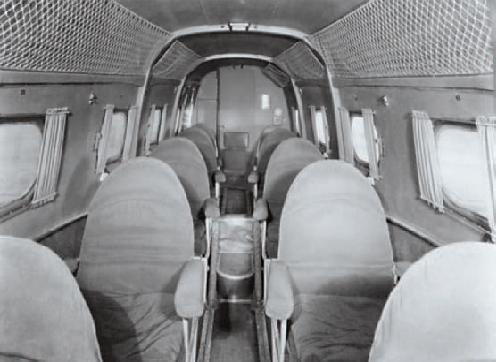
Boeing 247, 1933
In December 2008, an airplane crashed while taking off, ending up on fire in a 40 foot deep ravine several hundred yards from the runway. There were no fatalities among the 115 passengers and crew, even though the metal fuselage had been breached by fire. 
In December 2009, an airplane carrying 154 passengers and crew overran the runway during a landing in heavy rain and broke apart. There were no fatalities. accidents involving the current generation of commercial airplanes are rare but offer important insights into advancements in the safety and crashworthiness of airplane design. These advancements reflect decades of innovation and targeted efforts to improve survivability in an airplane accident, especially during takeoffs and landings. 
Boeing 707, 1958
in august 2010, an airplane crashed while attempting to land during poor weather, breaking into three pieces on impact. There were 125 survivors among the 127 passengers and crew aboard the flight. The industry’s work on airplane safety and survivability of airplane interiors emphasizes three areas: surviving impact, surviving a fire, and evacuation.

Surviving Impact

Survivability is greatly influenced by seat design. The greater the ability of airplane seats to remain in place and absorb energy during an impact, the greater the likelihood of passenger survival. in addition, the seat back is designed to protect passengers behind the seat from head injury. Seat design. in the 1930s, passenger airplane seats could withstand a static force six times the force of gravity (6g). For commercial jet airplanes beginning in the 1950s, the 6g requirement was raised to 9g. Today’s seats are required to withstand a 16g dynamic force. a 16g seat is tested in a manner that simulates the loads that could be expected in an impactsurvivable accident. 

Boeing 787, 2001
Two separate dynamic tests are conducted to simulate two different accident scenarios: one in which the forces are predominantly in the vertical downward direction and one in which the forces are predominantly in the longitudinal forward direction. The highest load factor is in the forward direction at a force of 16g. Head injury protection. Where head contact with seats or other structure can occur, boeing provides protection so that the head impact does not exceed the Head Injury Criterion (HIC) established by the u.S. Federal aviation administration (FAA). HIC measures the likelihood of head injury resulting from an impact. compliance with the Hic limit is demonstrated during a dynamic sled test that includes a 50 percent male size test dummy, the seat, and any airplane structure that could be impacted by the occupant’s head. 

Surviving a fire

Floor proximity lighting under dark conditions
In 1985, the FAA developed a new test standard for large surface area panels, such as ceilings, walls, overhead bins, and partitions. The standard required that all commercial airplanes produced after august 20, 1988, utilize panels that exhibit reduced heat and smoke emissions, delaying the onset of a flashover (i.e., the simultaneous or near simultaneous ignition of all flammable material in an enclosed area). interiors are updated and refurbished many times during the life of an airplane. This results in interiors that incorporate these enhancements even in older airplanes. in addition, airplanes manufactured on or after august 20, 1990, must comply with definitive standards of a maximum peak heat release rate of 65 kilowatts per square meter, a maximum total heat release of 65 kilowatt minutes per square meter, and specific optical smoke density of 200 (i.e., the OSu 65/65/200 fire safety standard defined by Ohio State university). extensive fire protection systems are also part of every Boeing passenger airplane. These systems include the use of fire protective materials, smoke detection and fire extinguishing systems, and insulation blankets designed to resist burn through from a fuel fire next to the bottom half of the fuselage. 

Evacuating the Airplane


Floor proximity lighting under smoky conditions
The FAA requires that an airplane can be evacuated of all passengers in 90 seconds. Boeing airplane interiors include a number of features to facilitate this process. These features include floor proximity lighting and escape slides. Floor proximity lighting. When passengers evacuate after a crash, buoyant hot smoke and gases can fill the cabin down to near floor level, obscuring overhead lighting. evacuation is improved through the use of lights, reflectors, or other devices to mark the emergency escape path along the floor. The Faa determined that floor lighting could improve the evacuation rate by 20 percent under certain conditions. as a result, the U.S. commercial fleet was retrofitted with floor proximity lighting by 1986, marking the completion of a two year compliance schedule. The 777 was the first Boeing airplane to include floor proximity lighting in production models.


10/05/2011

Delta adding to in-flight entertainment via wi-fi

Delta Air Lines announced it is adding to its in-flight entertainment options on some of its aircraft, including more shopping and entertainment on its free in-flight wi-fi portal, as well as on-demand movies and television through wi-fi. For those with wi-fi-enabled devices, Delta is adding to its free in-flight portal called called Delta Connect. It now offers more free shopping and entertainment, along with flight information, which do not require a payment for in-flight wi-fi service.

And on flights on Delta's 16 Boeing 757-300 jets, travelers with laptops can buy on-demand movies for $3.99 and up, and on-demand television at an introductory price of 99 cents, which will not require a separate payment for in-flight wi-fi. Travelers will be able to play back the movies and television shows on the same device for at least 24 hours after their flight. Delta said it will expand the on-demand offering in early 2012 to tablets and mobile devices on the 757-300s, which have overhead screens but do not have seat-back entertainment systems.
Atlanta-based Delta is installing wi-fi on many of its domestic aircraft, including some of its regional jets, and expects to soon have in-flight wi-fi on more than 800 of its planes. The in-flight entertainment additions are part of a broader $2 billion investment by Delta to improve the experience for customers.

Boeing and Lion Air Pioneer Precision Satellite Navigation Technology

Boeing and Lion Air, an all-Boeing Next-Generation 737 operator, are pioneering the use of precision navigation technology in South Asia with the introduction of Required Navigation Performance (RNP) flight operations. RNP enables airplanes, using global positioning systems, to fly precisely predefined flight paths without reliance on ground-based navigation stations. 
Lion Air, together with Boeing and the Indonesian Directorate General of Civil Aviation, successfully performed validation flights to test tailor-made RNP Authorization Required (RNP AR) procedures at two terrain-challenged airports, Ambon and Manado, Indonesia. 
"We look forward to seeing these procedures fully implemented so we can realize the substantial economic and safety benefits provided by this program," said Captain Ertata Lananggalih, managing director of Lion Air. The Directorate General of Civil Aviation Indonesia intends to implement RNP at other airports in the country. 

Lion Air is employing the most advanced version of RNP -- RNP Authorization Required -- that navigates the world's most challenging terrain. RNP helps reduce airplane flight miles and provides for idle-power descents that save fuel, reduce emissions and noise and enhance safety. 
"Boeing is leading the way in designing and implementing performance-based operations such as RNP," said Neil Planzer, vice president, Air Traffic Management, Boeing Flight Services. "It's part of our commitment to help our customers maximize the superior capability and technology inherent in their airplanes." 
Boeing subsidiary Jeppesen, designed, charted, and helped certify the instrument flight procedures, while Boeing Flight Services led the overall project, conducted an RNP Safety Assessment, and trained Lion Air's leadership, dispatchers and flight crews. Boeing worked with Indonesia's Directorate General of Civil Aviation through the construction of a national regulatory framework necessary to fully certify the airline for RNP operations under ICAO guidelines. 

10/03/2011

Performance Based Navigation (PBN) Lags Behind Schedule


ICAO’s target of having satellite-based approaches at every qualifying airport by the end of 2016 will not be met at the current rate of deployment, industry experts say. Only a few years into the ICAO time line, deployment already is well behind schedule. There would have to a significant acceleration in the rollout of these procedures for the ICAO goal to be met.
Broadly, performance-based navigation (PBN) encompasses a shift from current ground-based navigation aids emitting signals to aircraft receivers, to ‘in-aircraft’ systems that receive satellite signals that meet specific accuracy and integrity requirements combined with the Global Positioning System (GPS) to advise the aircraft’s position.

This performance-based navigation (PBN) initiative stems from an ICAO resolution in 2007, reinforced by another resolution last year. The requirement is for every instrument-capable runway to have satellite-based approach procedures with vertical guidance (APV) and lateral guidance. APV falls under the broad definition of required navigation performance (RNP).
The first deployment target was for approaches to be installed at 30% of airports globally by the end of 2010, but to date this has occurred at just 15%. The next milestones call for 70% of the procedures to be implemented by 2014, and 100% in 2016.

Director general of the Civil Air Navigation Services Organization Graham Lake, says “We are not really seeing the sort of progress we’d like, it is not a question of funding, because PBN “is about implementation of existing technologies.”
Robert Kennedy, a PBN advisor, agrees that ICAO members are “struggling to achieve” the PBN milestones. But while the current deployment level is low worldwide, the rate of introduction is picking up, Kennedy says. Despite these signs of improvement, “we all realize we are at the tip of the iceberg [with deployment] and there is so much more work to be done.”

Steve Fulton, technical fellow with GE Aviation’s PBN Services says, "there are more than 1,500 runways in North America that are candidates for APV approaches, and so far about 30% have them. Latin American deployment is in the 10%-20% range, but no other region has reached 10% deployment. Showing aviation authorities that implementing APVs is not difficult or prohibitively expensive will help spur deployment. Gaining airline support for PBN is crucial. New aircraft already are equipped, and ICAO offers support to regulators that want to begin implementation. However, the lack of qualified procedure designers is problem.

In the U.S., for example, many carriers are disenchanted with APV initiatives, Fulton says. Survey responses show that airlines often do not use APV approaches because many offer only limited efficiency gains. The airline calls for added value are “not unrealistic or out of line with the ICAO goals,” says Fulton. “If [APVs] continue to not meet expectations, [the ICAO initiative] will fail.”

10/01/2011


MD-80 Drag-Reducing Kit Wins FAA Approval


A drag-reducing upgrade kit developed for Boeing MD-80 operators has received supplemental type certification from the FAA.


Developed by Long Beach, Calif.-based engineering company Super98, the first part of the kit is initially designed to reduce fuel burn by 2.5% or more, with a further 1% benefit available from a more extensive upgrade. Fuel savings were verified in flight tests of an instrumented MD-83 in late 2010 and early 2011.
Fuel savings from the Phase 1 kit are estimated at more than $236,000 per aircraft per year based on a $3/gallon oil price, says Super98. The Phase 1 kit is divided into two sub-kits, the first of which includes flap hinge fairings forward and aft, aileron and elevator tab hinge covers, wing-body sealing and wing trailing edge seals. The second sub-kit includes flap segment seals, a windshield fairing, rudder lower gap seal, aileron edge seal, a main landing gear door skid, refaired tail skid and a horizontal stabilizer tip seal.
The additional modifications that will deliver a further 1% drag reduction require more time to install than overnight maintenance stops. They include slat lower trailing edge seals, slat segment gap seals and spoiler trailing edge extensions.
Super98 expects to have the first kits installed around year-end and the first customer for the full package to be on contract in the first quarter of 2012. Overall, more than 700 MD-80s remain in service.


MD-80 Phase I Configuration

In the first quarter of 2011 Super98 successfully completed the Phase I flight test program, validating a fuel burn reduction of more than 3.5%.

The configuration reduces parasitic drag in the areas around the nose, fuselage, wing, main landing gear, rudder, and elevator of the airframe.


Flap Hinge Fairings
Aileron Modifications
Elevator Modifications
Wing-body sealing
Low Drag Slats
Low Drag Spoilers
Wing trailing edge Improvements
Flap Modifications
Center Windshield Modifications
Rudder Modifications
Main Landing Gear Doors Modifications
Re-faired tail skid
Horizontal Stabilizer Modifications

Flight testing for the Phase I package was completed in 1st Qtr 2011.


MD-80 Phase II Configuration 
The Phase II Drag Reduction Configuration  yields a 4% reduction in fuel 


Rudder Gap Reduction Seals

Aileron Lower Gap Seals

Vertical Stabilizer Tip

Fairing Wing Tip Treatment

Slat Lower Trailing Edge Seals

CG Management System

Wing Trailing Edge Treatment


The Phase II Kit is available in two subkits. Subkit 1, consisting of fairings, covers and seals is available in 2012. Subkit 2, consisting of system changes is scheduled to be available in 2013.


9/22/2011


US Airways remains leader in NextGen


US Airways remains committed to being a leader in NextGen, the US effort to establish a new-technology air traffic management system.
US Airways flight technical operations captain Brian Townsend told attendees at the Avionics for NextGen Conference Sept. 13 that the carrier "remains focused as a NextGen leader.”
The airline has been performing trials using Automatic Dependent Surveillance-Broadcast (ADS-B) technology in 20 Airbus A330s and two simulators, at its hub at Philadelphia International Airport, under a five-year FAA/ACSS memorandum of agreement.


"One of the advantages for selecting A330s is that we are able to train all the pilots on the ADS-B applications. It is now capturing the numbers on performance based navigation and the company is pleased with what they're seeing", Townsend said.
Townsend said the next steps will be to make certain that standards and requirements are well thought out and established, to find a viable mechanism or path that permits early equipage, and be willing to take incremental steps."It's not a revolution, it's an evolution," he said.
Some of the "low-hanging fruit" which may be easier to "pick" at first, he said may be CDTI Assisted Visual Separation/CDTI-Enhanced Delegated Separation (CAVS/CEDS), as there would be little or no change to current visual operations and phraseology. "CAVS/CEDS has the potential to provide early benefits and establish a foundation for ADS-B."